Navigating Reverse Culture Shock After Studying Abroad
Explore the challenges of reverse culture shock after studying abroad and discover practical strategies for readjustment and support from universities.


A student spends months preparing to study abroad, then learns to navigate another country, builds friendships, and establishes routines. Returning home seems like the straightforward part. Yet familiar surroundings can feel unexpectedly different when the student arrives.
Reverse culture shock after studying abroad can make that return more challenging than anticipated. Relief at being home may coexist with missing life overseas. For students and the institutions supporting them, recognizing this possibility creates room for preparation, practical support, and a more complete international education experience.
What Is Reverse Culture Shock After Studying Abroad?
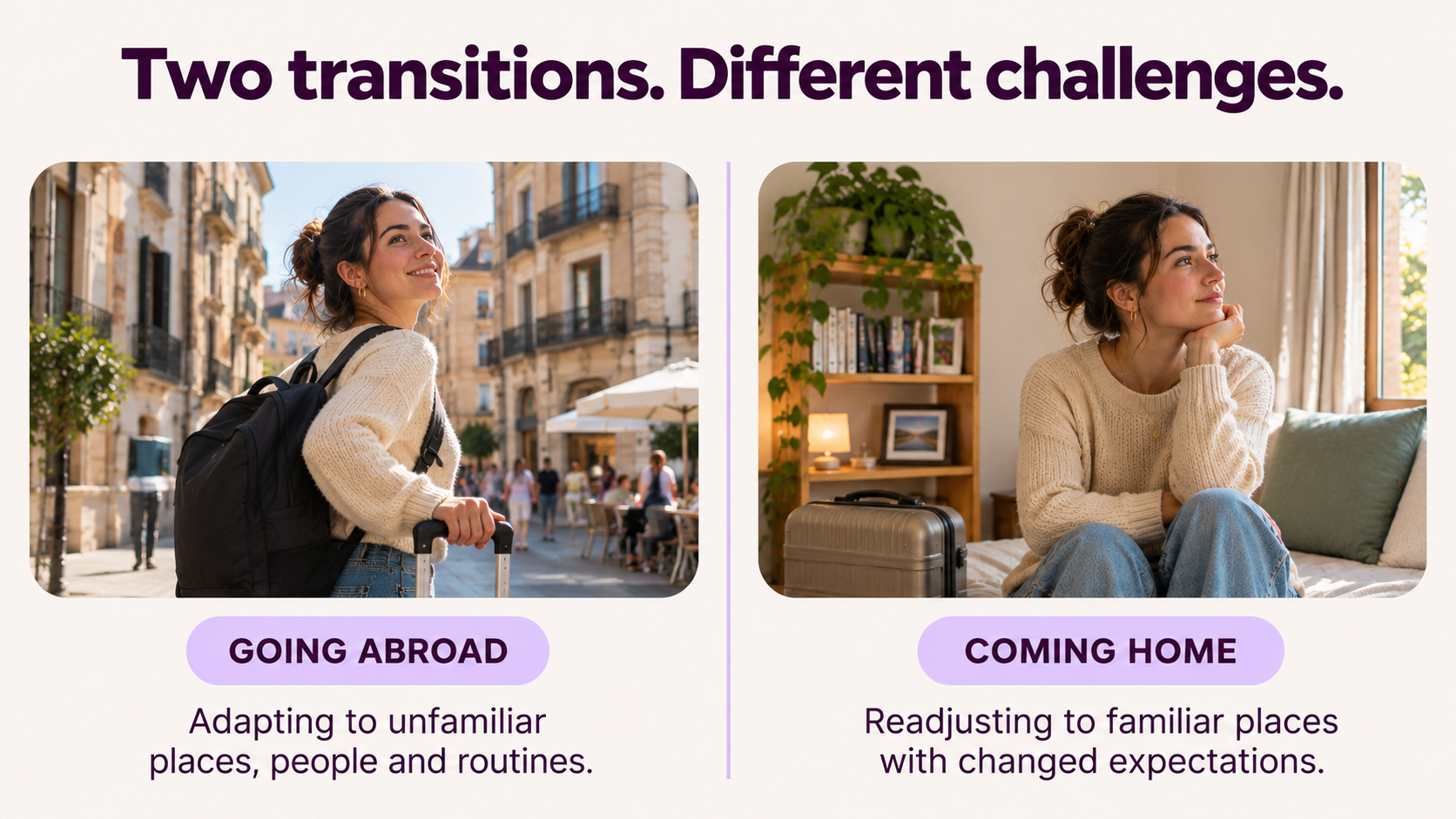
Reverse culture shock is the emotional and social adjustment that can occur when someone returns to their home environment after living abroad. Familiar relationships, expectations, and routines may feel different because the returning student, their surroundings, or both have changed.
Initial culture shock involves adapting to an unfamiliar setting. Study abroad reentry involves readjusting to a setting the student expects to understand already. That expectation can make discomfort harder to recognize.
Not every returning student experiences reverse culture shock. Smith College’s reentry guidance explicitly recognizes this variation. Reactions differ in intensity and do not need to follow a fixed sequence.
Why Can Returning Home Feel Harder Than Expected?
Returning home can feel harder than expected when the assumption of an effortless reunion meets changed habits, relationships, and priorities. Students may prepare extensively for cultural differences abroad while giving little attention to readjustment afterward.
Changed Independence and Familiar Expectations
A student who organized their meals, transportation, and schedule abroad may return to family routines that require more negotiation. The difficulty can involve reconciling new independence with expectations that have stayed the same.
Identity can shift, too. A different academic environment or international friendship group may influence what the student values. Meanwhile, friends at home have continued their lives. Reconnecting requires curiosity about those changes on both sides.
Missing International Relationships and Daily Life
Returning students may miss the ordinary structure of life abroad: walking to class with friends, practicing another language, or sharing meals with a host family. Losing those routines can leave gaps that familiar surroundings do not immediately fill.

Explaining the experience can also be difficult. A brief conversation rarely captures months of learning and adjustment. Friends may care without knowing what to ask, while the returning student may interpret a change of subject as disinterest.
Common Signs of Post-Study-Abroad Adjustment
Post-study-abroad adjustment can include frustration, nostalgia, loneliness, restlessness, or feeling misunderstood. Some students notice reduced motivation for familiar coursework or compare home life unfavorably with their time overseas.
The University of Pittsburgh’s returnee resources describe challenges such as missing people and places abroad, changed relationships, and difficulty explaining the experience. These are possible experiences, not a diagnostic checklist.
A student can feel happy to reconnect with family and still feel disconnected from everyday life. Neither reaction invalidates the other, and adjustment should not be judged against another student’s experience.
Reverse culture shock is not a clinical diagnosis. Persistent, worsening, or overwhelming distress, particularly when it affects sleep, relationships, study, or daily functioning, deserves professional attention. Students can contact campus counseling or a qualified healthcare professional without waiting for a predetermined adjustment period to pass.
How Students Can Navigate Reverse Culture Shock
Students can make reentry more manageable by preparing for change, rebuilding connection, and finding ways to use what they learned abroad. The aim is to integrate the experience into current life rather than recreate the overseas semester.
-
Prepare for Reentry Before Leaving the Host Country
Before departure, identify what you will miss, what you look forward to, and which routines may need renegotiating at home. Discuss practical expectations with family or housemates. Save the contact details for your study abroad office and support services before you need them.
-
Maintain Connections While Rebuilding Local Routines
Arrange realistic ways to stay in touch with international friends, such as a recurring call that works across time zones. Meaningful contact can preserve relationships without requiring you to remain constantly connected to life abroad.
At home, begin with a few regular activities: a consistent sleep schedule, meals, movement, and time with someone you trust. Add commitments gradually. Keeping one valued habit from abroad, such as language practice, can connect your previous routine with your current one.
Share Experiences and Apply New Perspectives
Choose specific experiences to share rather than trying to summarize the entire stay. Explain what changed your thinking, then invite the other person to share what happened while you were away. Returnee groups can provide space for longer conversations.
Join an international student organization, language exchange, or alumni community. Explore a course, volunteer role, or peer-advising opportunity that uses your new interests. These activities give the experience a place in your present life.
If adjustment feels overwhelming, contact a support professional. Peer connection and reflection can be useful, but they do not replace individual care when it is needed.
Why Universities Should Include Reentry in Study Abroad Programs
Universities should consider reentry because students may still need guidance after the overseas portion of a program ends. Addressing return alongside predeparture preparation, arrival coordination, and in-country support helps make institutional contact routes clearer.
The following are recommended practices to adapt to program scope and student needs, not universal mandatory requirements:
- Pre-return orientation: Explain possible adjustment challenges before students leave the host country, including where to seek help.
- Reentry workshops: Offer reflection sessions that connect international learning with academic priorities and daily life.
- Communication before and after return: Provide named contacts, resource links, and opportunities to reconnect. Avoid assuming students will seek the office themselves.
- Peer networks: Invite returning students to optional meetups or existing alumni communities without making personal disclosure a condition of participation.
- Clear referrals: Explain how to access counseling, academic advising, accessibility support, and other relevant services. Verify eligibility and contact routes.
- Cohort feedback: Ask which return-home difficulties students encountered and which resources were useful. Use responses to improve the next cohort’s preparation.
Reentry challenges for international students also differ according to personal circumstances and the environment they return to. Offer several participation formats, and avoid treating attendance at a workshop as evidence of individual wellbeing.
Building a More Connected Study Abroad Experience
Clear coordination helps institutions maintain continuity when responsibilities pass between program staff, academic departments, and student support teams. Accessible participant information should show who owns an operational question and where the next handoff belongs.
Our approach connects that operational foundation. Floweal Desk brings program and participant management together with housing, documentation, and mobility-related visibility. Our guide to housing and documentation coordination explains how shared information and defined responsibilities support continuity.
That role has boundaries. Student well-being services and institutional reentry initiatives remain with the appropriate teams. Program coordination should not be confused with psychological counseling, alumni management, dedicated reverse culture shock programming, or automated post-return wellbeing monitoring.
Institutions should define how operational questions reach coordinators and personal support needs reach qualified services. Sensitive counseling information should remain within the appropriate institutional systems and access arrangements.
Frequently Asked Questions
-
What Is Reverse Culture Shock After Studying Abroad? Reverse culture shock is the adjustment some students experience when returning to their home environment after living abroad. Changed perspectives, relationships, and routines can make familiar surroundings feel different. It does not affect every student.
-
How Long Does Reverse Culture Shock Last? There is no universal timeline. Adjustment varies by person and circumstances, and feelings may change rather than improve in a straight line. Seek professional support when distress persists, worsens, or interferes with everyday life.
-
Why Do Students Feel Different After Returning Home? Students may return with different habits, interests, confidence, or expectations. Their relationships and home environment may have changed, too. Reconciling those differences can take attention, even when returning home is welcome.
-
How Can Universities Support Students After Studying Abroad? Universities can prepare students for reentry, offer reflection sessions and peer connections, communicate after return, and provide clear support referrals. Assigning responsibility for these activities helps students understand whom to contact.
-
What Helps With Post-Study-Abroad Adjustment? Realistic expectations, meaningful contact with international friends, gradual routines, and opportunities to apply new skills can help. Connecting with other returnees provides perspective. Professional support is appropriate whenever the transition feels difficult to manage.
Supporting Students Beyond the Return Journey
International mobility does not necessarily end when a student returns home. Reentry deserves preparation, communication, and clear responsibility, alongside the operational work that supports the rest of the program.
For universities, the next step is to connect program coordination with institutional support pathways while keeping each team’s role clear. Explore how our platform supports the operational management of international mobility programs.
We make it flow.
Explore this topic