When Study Abroad Operations Outgrow the Spreadsheet
Outdated spreadsheets hinder study abroad operations. Discover how centralizing workflows can enhance efficiency and coordination in your programs.


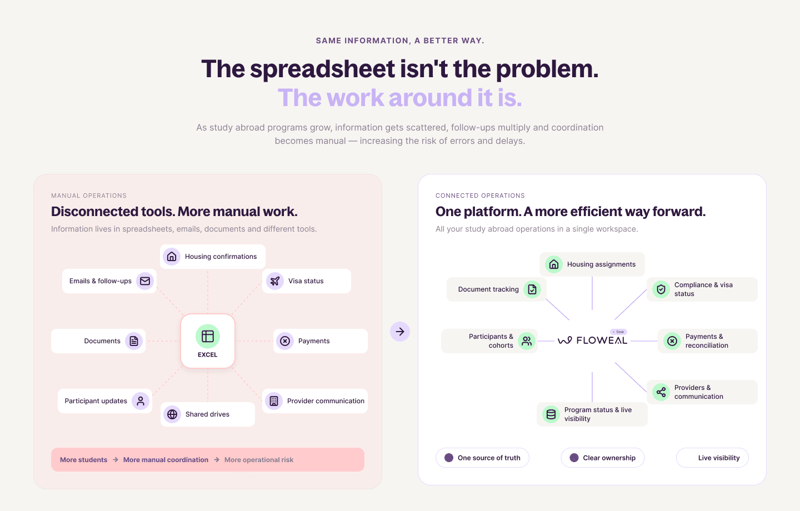
The spreadsheet is not the problem. The problem is the work that happens around it. Every time a coordinator updates a housing confirmation, sends a follow-up email to a provider, checks if a document has been received, or reconciles a payment against a lease, that is operational time. None of that work appears in the spreadsheet itself. It exists in the handoffs, the context switches, and the manual transfers between disconnected tools.
Study abroad operations depend on more than housing assignments. They require coordination across program teams, partner institutions, housing providers, immigration specialists, and relocating students. Each participant carries a set of documents, deadlines, and dependencies that must move through the process without error. When that coordination depends on people manually moving information between tabs, emails, and shared drives, the real cost is not the time spent in the spreadsheet. It is the time spent keeping everything around the spreadsheet aligned.
The operational cost becomes visible when someone is sick, when a new cohort arrives earlier than expected, or when a housing provider changes payment terms mid-season. The process does not break because the data is wrong. It breaks because the system depends on manual coordination to keep the data current.
What Breaks When Study Abroad Operations Scale
Manual coordination works when the volume is manageable. It breaks when programs grow faster than the process can absorb. More students mean more housing assignments. More destinations mean more provider relationships. More cohorts mean more overlapping timelines. Each layer adds complexity that spreadsheets were never designed to manage.
Fragmented information creates operational risk. When housing confirmations live in one file, visa statuses in another, and payment reconciliation in a third, version mismatches become inevitable. Someone updates the wrong file. A confirmation email gets missed. A deposit payment does not match the lease. The team spends more time reconciling data than executing the work.
The risk increases when specific people become the only ones who know where information lives or how a process works. That dependency creates bottlenecks. It removes traceability. When someone leaves or a deadline accelerates, the loss of context becomes an operational problem. Growth exposes the limit of what manual coordination can sustain.
What Connected Study Abroad Operations Look Like
Connected study abroad operations centralize workflows, data, and coordination in a single system. Housing status, document tracking, compliance requirements, and provider communication flow through one platform instead of being managed separately. Teams gain visibility into what has been confirmed, what is pending, and where action is required without reconciling multiple sources.
Floweal Desk centralizes mobility workflows for universities managing study abroad programs. Housing assignments, visa documents, participant status, and provider coordination operate in one workspace. Teams configure destinations, cohorts, and policies once. Participants move through the process with their housing, documents, and services connected to their program timeline. The platform provides a live view of confirmations, pending assignments, and operational status without requiring manual updates.
When operations are connected, the coordination cost drops. Follow-ups happen inside the system. Updates are visible to everyone who needs them. Handoffs between teams and providers no longer depend on manual transfers. The operational capacity of the team increases without requiring headcount to grow at the same rate. That is when study abroad operations outgrow the spreadsheet.
FAQs
-
Why do spreadsheets become difficult to scale in study abroad operations? Spreadsheets organize information but do not execute coordination. As programs grow, the manual work required to move information between teams, housing providers, and disconnected tools increases faster than the process can absorb. The operational cost appears in follow-ups, handoffs, and reconciliation, not in the data itself.
-
What are the risks of managing student housing manually? Manual housing coordination increases the risk of version mismatches, missed confirmations, dependency on specific people, and loss of traceability. When housing status lives in one file, payments in another, and provider communication in email, reconciling data becomes a recurring operational task that scales poorly.
-
When should universities consider centralizing mobility workflows? When the team spends more time coordinating information than executing operational work, when growth requires adding headcount just to manage existing processes, or when visibility into program status requires manual reconciliation across multiple tools, it is time to centralize workflows in a connected system.
We make it flow.
Explore this topic