Preventive vs. Reactive Maintenance: Cost Implications
Explore the costs of preventive vs. reactive maintenance for rental properties, evaluating hidden expenses and strategies for optimal property management.

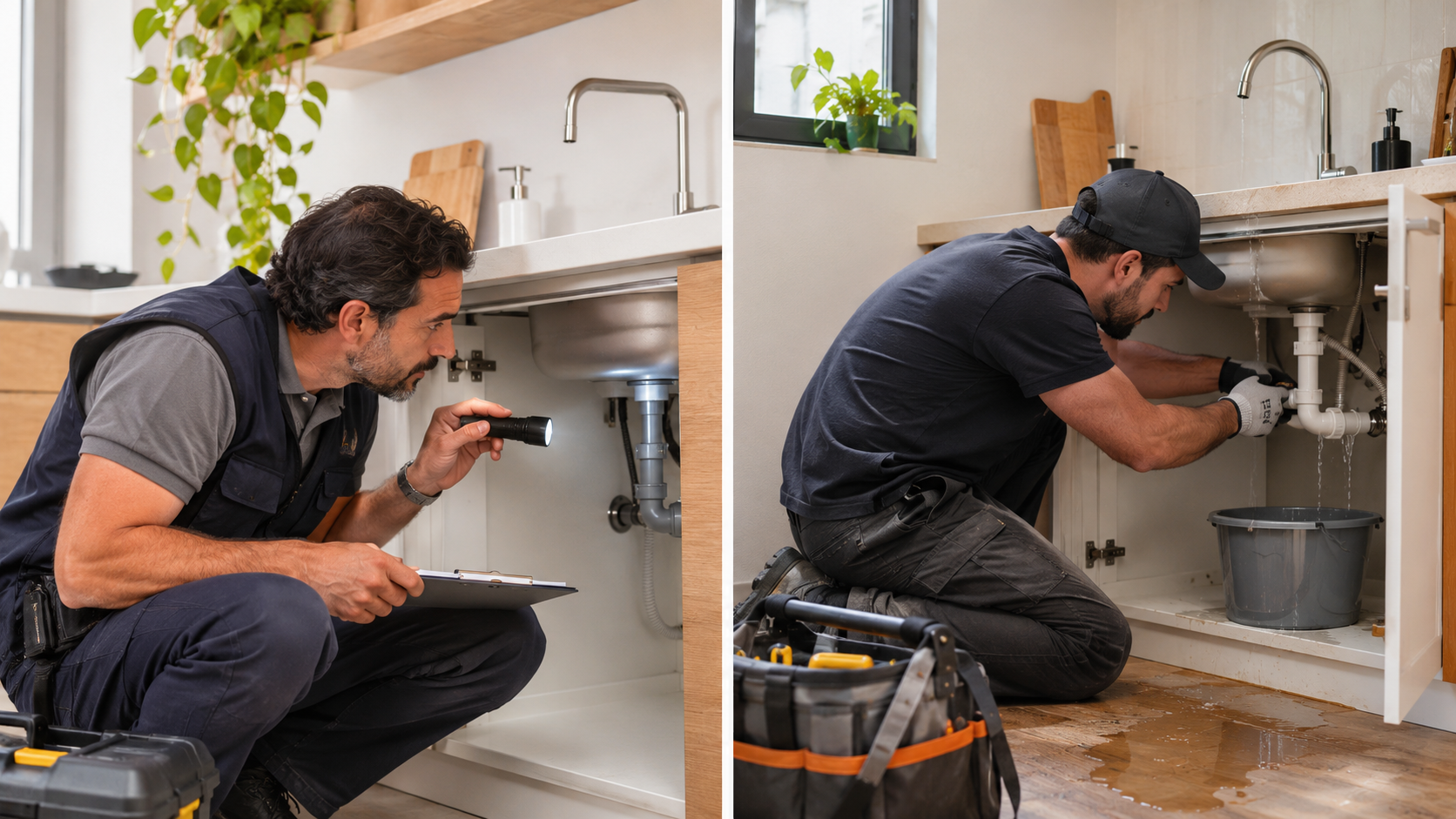
A manager postpones an inspection to avoid an expense. Weeks later, equipment fails during an occupied stay, requiring urgent repairs, access arrangements, tenant updates, and owner explanations.
Comparing preventive vs. reactive maintenance means assessing planned spending alongside emergency premiums, disruption, downtime, and coordination. Neither approach wins universally: your property maintenance strategy needs planned care and a reliable response when problems occur.
What Is Preventive Maintenance in Rental Properties?
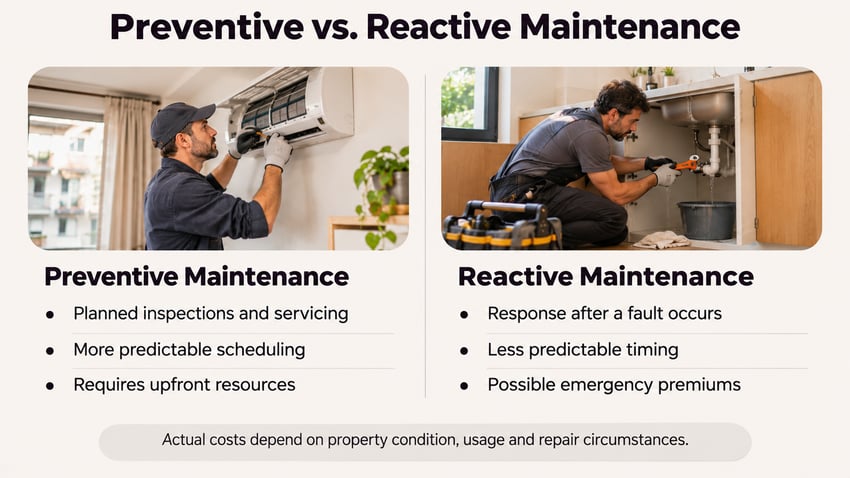
Preventive maintenance is planned inspection, servicing, and routine checking intended to identify deterioration and address maintenance needs before failure. For rental properties, it also includes periodic condition reviews and a documented intervention history.
Examples include HVAC servicing, plumbing leak checks, appliance inspection, qualified electrical assessments, and common-area condition checks. Work involving electrical systems or other specialist risks may require appropriately qualified professionals.
Preventive and predictive maintenance differ. Preventive activities follow planned schedules or usage intervals; predictive approaches use condition information and analysis to inform intervention.
What Is Reactive Maintenance and When Is It Necessary?
Reactive maintenance responds after a difficulty is identified or equipment fails. Examples include unexpected plumbing leaks, heating or cooling breakdowns, appliance malfunctions, and defective locks or access systems.
It cannot be eliminated entirely, and not every reactive repair indicates poor planning. Act immediately when the situation requires it for safety, applicable legal obligations, tenant well-being, or property protection. Triage should distinguish urgent habitability issues from routine defects without delaying necessary assistance.
Preventive vs. Reactive Maintenance: A Cost Comparison
Preventive work commits resources before failure; reactive work commits them after a problem appears. Financial outcomes depend on asset age, condition, usage, occupancy, and maintenance history.
| Evaluation factor | Preventive maintenance | Reactive maintenance |
|---|---|---|
| Initial expenditure | Planned spending before failure; some checks find no work needed. | Spending begins when problems arise; timing is uncertain. |
| Budget predictability | Known activities support budgeting; findings can add costs. | Variable repair timing complicates forecasts. |
| Emergency contractor costs | May enable standard-rate appointments; emergencies remain possible. | Urgent jobs may attract call-out or after-hours premiums. |
| Operational disruption | Access can be planned, but servicing still disrupts routines. | Unplanned access and coordination may interrupt operations. |
| Property downtime | Some servicing requires planned unavailability. | Serious failures may create unplanned unavailability. |
| Tenant experience | Advance notice helps tenants plan around access. | Unexpected loss of services requires clear communication. |
| Administrative workload | Scheduling, access, records, and follow-up require resources. | Urgent coordination and repeated visits can add work. |
| Equipment lifespan | Suitable servicing may support expected useful life. | Some failures cause further damage; low-risk items may reasonably run to failure. |
| Maintenance documentation | Records cover checks, findings, and interventions. | Records cover reported defects and repairs; quality depends on process. |
Repair invoices are direct costs. Coordination time, disrupted stays, and lost availability are potential additional impacts, not automatic consequences of every repair.
The Hidden Costs of Emergency Repairs
Emergency maintenance expenses can extend beyond base labor and materials:
- Emergency call-out fees, after-hours labor, and expedited parts or replacement equipment.
- Administrative coordination and repeat contractor visits.
- Temporary loss of rental availability where demand or an existing booking is affected.
- Tenant complaints, disruption, and owner dissatisfaction requiring follow-up.
- Compensation or contractual consequences when applicable terms or legal requirements create them.
These costs may impact net operating income through higher operating expenses or reduced revenue. But an unavailable unit does not automatically mean lost rent: identify the actual revenue effect, distinguish estimates from confirmed losses, and avoid treating dissatisfaction as a quantified expense without evidence.
How to Calculate the Real Cost of Property Maintenance
Use a consistent annual economic-cost model, with non-overlapping categories:
Annual maintenance cost = Scheduled maintenance expenses + Reactive repair expenses + Emergency premiums + Applicable downtime losses + Other directly attributable operational costs.
- Scheduled: planned inspections and servicing.
- Reactive: base repair labor and materials.
- Emergency premiums: incremental urgency charges, excluded from base repairs when shown separately.
- Downtime: attributable rental revenue lost, using documented assumptions.
- Other: attributable coordination or temporary measures not included elsewhere.
Add staff time separately only when not already counted. Do not subtract lost revenue twice through both downtime and rent adjustments. This economic comparison is not an accounting expense total; reconcile it with financial reports and treat capital replacements separately under your accounting policy.
Six metrics for property maintenance planning
- Maintenance cost per rental unit: annual model total ÷ average managed units; identify whether downtime is included.
- Maintenance expenses as a percentage of rental revenue: booked maintenance expenses ÷ rental revenue × 100.
- Emergency repairs as a percentage of expenditure: emergency base repair costs plus premiums ÷ total maintenance expenditure × 100; exclude modeled revenue losses.
- Average repair resolution time: total elapsed time from report to verified resolution ÷ resolved incidents.
- Repeat incident rate: repeat cases ÷ total cases × 100, using a defined issue and time window.
- Maintenance-related unavailable unit-days: sum affected unit-days, without counting overlapping incidents twice.
Building a Preventive Maintenance Plan for Rental Properties
- Classify properties and equipment by risk. Record condition, age, usage, failure consequences, and maintenance history.
- Prioritize critical systems. Focus on failures impacting safety, habitability, or operational continuity before minor inconveniences.
- Define inspection and service schedules. Follow manufacturer recommendations, applicable requirements, equipment condition, and operational needs; avoid universal intervals.
- Establish a realistic budget. Separate planned expenses, replacement reserves, and unexpected-work allowances. A reserve is not an expense until used.
- Define contractor responsibilities. Confirm qualifications, service expectations, contact points, authorization limits, escalation, and documentation.
- Record activity. Capture unit, equipment, intervention date, findings, costs, recurring incidents, and unresolved problems.
- Review performance. Compare actual costs and failures, then adjust priorities and schedules based on results.
Why Maintenance History Matters for Portfolio Performance
Historical records, distinct from predictive analytics, support recurring-failure reviews, asset costs, replacements, contractor comparisons, owner reports, and budget forecasts. Link repeat incidents rather than treating each invoice as an unrelated event.
Compare repair-versus-replacement options using condition, expected service needs, remaining usefulness, and disruption. Incomplete coding, changing usage, or missing costs can distort conclusions; collecting more records does not guarantee accurate forecasts.
How Maintenance Coordination Affects Tenant and Owner Satisfaction
Clear coordination makes responsibilities and expectations visible during disruption. Assign follow-up ownership, explain confirmed next steps, coordinate contractor access, and give realistic update times rather than unsupported completion promises.
Retain relevant information so tenants do not repeat the same report. Document outcomes and give owners the context behind spending and unresolved issues. Our rental issue management guide covers that follow-through in more detail.
Connecting Maintenance Operations With Floweal Management
With Floweal Management, we connect portfolio operations, bookings, availability, and financial processes. Pro includes incident management, alerts, a finance module, and check-in/check-out operations; Enterprise includes Pro functionality. Channel Hub has a different scope.
Within our connected platform, incident visibility can be considered alongside stays and broader operational activity. We provide a shared operational context; teams still need defined technical responsibilities and a maintenance strategy. Management supports broader operations; it is not a dedicated maintenance system. Preventive schedules, predictions, ROI calculations, and contractor dispatch should not be assumed.
Frequently Asked Questions
-
Is preventive maintenance cheaper than reactive maintenance? Not necessarily. Prevention is financially useful when suitable inspections and servicing avoid costs greater than the program’s expense. Low-risk equipment may justify a reactive approach, while critical systems require different priorities. Include emergency premiums and applicable downtime, and expect initial spending to rise if inspections uncover deferred work.
-
What is considered preventive maintenance in rental properties? Planned inspections, servicing, equipment checks, and periodic condition reviews are preventive activities when performed before a reported failure. Examples include checking for plumbing leaks or arranging qualified HVAC servicing. Document findings and assign responsibility for unresolved maintenance needs and defects.
-
How often should rental properties receive preventive inspections? There is no single interval for every property or system. Use manufacturer recommendations, applicable local requirements, qualified advice, equipment condition, and usage to set schedules. Reassess when failures recur; property walkthroughs do not replace required specialist inspections by qualified professionals.
-
What are the biggest hidden costs of emergency repairs? Potential additions include call-out fees, after-hours labor, expedited parts, staff coordination, repeat visits, and attributable lost revenue. Temporary arrangements or compensation may also apply depending on the incident, contract, and jurisdiction. Measure what actually occurs; an urgent repair does not automatically create every category of cost.
-
How can property managers reduce recurring maintenance incidents? Connect repeat reports to prior interventions, verify repairs, and ask qualified contractors to investigate underlying causes. Review equipment condition, repair history, usage, and replacement options before changing schedules. Track outcomes using consistent definitions; recurrence may reflect incomplete repairs, unsuitable equipment, or operating conditions rather than insufficient servicing alone.
Connect Maintenance Strategy With Portfolio Visibility
A structured maintenance approach combines clear responsibilities, incident visibility, and coordination across daily property operations. Use documented costs and outcomes to decide where prevention adds value, while retaining an appropriate emergency response.
Explore Floweal Management for broader portfolio coordination, without assuming that adoption will eliminate emergencies or automatically reduce maintenance costs.
We make it flow.
Explore this topic