Centralize and Streamline Corporate Relocations with Floweal Desk
Streamline corporate relocations with an international mobility platform that centralizes processes and improves coordination across teams.


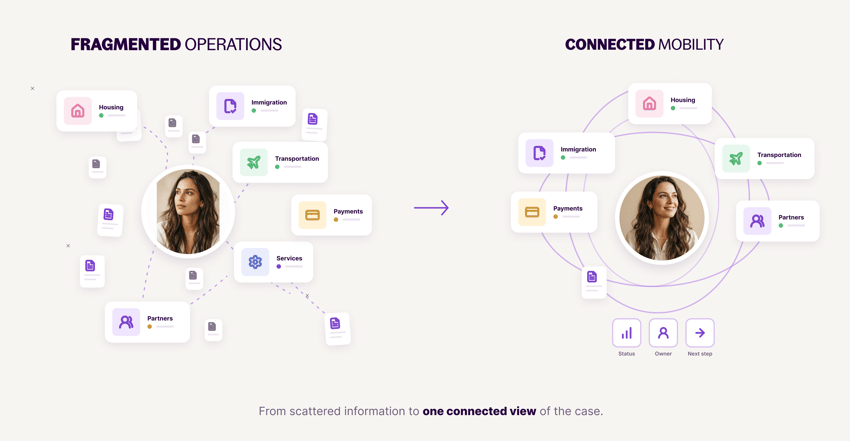
International relocation becomes harder to manage when no one has a complete view of the case. Housing is confirmed by email, immigration documents sit in another application, and an arrival date changes in a spreadsheet the local partner never sees.
The result is more manual coordination before, during, and after the move. As organizations manage more people and destinations, disconnected information makes it harder to spot delays, communicate changes, and assign the next action.
An international mobility platform connects these activities around each person and their case. This guide explains what to centralize, how to evaluate operational fit, and how Floweal Desk connects mobility processes without confusing document tracking with immigration approval.
What is an International Mobility Platform?
An international mobility platform is a digital environment that connects the information and coordination required for cross-border relocations. It brings together people, cases, housing, documentation, and services so teams can understand progress and coordinate responsibilities.
Its value depends on how those elements work together. Storing a document is not the same as knowing whether housing is confirmed, which service is still pending, or who needs to act before arrival.
For corporate mobility teams and relocation and immigration specialists, the goal is a shared case view. Information is organized around the relocating person, rather than scattered across applications and partner conversations.
Why Fragmentation Slows Global Mobility
Fragmentation forces teams to reconstruct the case before they can move it forward. Updates exist, but they are spread across systems, inboxes, and people who do not share the same view.
This can happen even when each partner delivers their part correctly. A housing confirmation and an immigration update are both useful, but their operational impact depends on the relocation timeline and the actions that follow.
Mobility teams absorb that coordination work. Time spent checking versions and forwarding updates is time unavailable for resolving exceptions, making decisions, and supporting relocating employees.
-
Duplicate Information and Outdated Statuses
An arrival date may appear in a case file, a booking email, and a transportation schedule. When it changes, every dependent activity needs attention. If one reference remains outdated, different parties work from different assumptions.
Centralization should establish where the current information is maintained, who updates it, and which activities depend on it. A shared record only helps when responsibility for keeping it accurate is clear.
-
Unclear Ownership and Reactive Follow-Up
“Pending” is a status, not an explanation. The case may be waiting for a document, an internal decision, a partner response, or an action from the relocating employee.
Each pending item requires an owner, a next step, and a review date. Otherwise, follow-up becomes a chain of inquiries, and continuity depends on the person who remembers the history.
-
Less Visibility as Case Volume Grows
Consider a team managing relocations to Madrid, Lisbon, and New York. One employee has confirmed housing, another is waiting for documentation, and a third has changed their travel dates.
A list of names and destinations does not explain where intervention is needed. Teams need to distinguish between progressing cases, blocked cases, and cases requiring a decision. Scaling operations means preserving that visibility as volume grows, not multiplying spreadsheets for each destination.
How Is Global Employee Mobility Managed?
Global employee mobility is managed by coordinating each stage of the relocation and assigning responsibility for the work involved. This includes defining scope, collecting information, arranging housing and services, tracking documentation, and supporting the employee during their stay.
Specialists advise on legal and immigration requirements. The relevant authorities make visa and permit decisions. Operational coordination must keep those roles distinct.
Teams also require two connected views: the details of each case and the status of the overall program. Both require consistent definitions. If “confirmed” means something different in each destination, program reporting can hide unfinished work.
-
Planning and Preparing for Relocation
Preparation establishes the destination, dates, expected duration, service scope, and responsible parties. It should also identify dependencies: which steps require specialist input, which decisions belong to the organization, and what must happen before housing or services can be confirmed.
Keep expected dates separate from confirmed dates. Teams can then plan around provisional information without presenting it as a final decision.
-
Arrival, Stay, and Case Closure
Support continues after arrival. Teams may need to check accommodation against the agreed conditions, coordinate local services, resolve issues, or record a change in the length of stay.
Case closure needs explicit criteria. Services should be completed, documentation recorded, and outstanding issues resolved or transferred to a named responsible party. Arrival alone does not mean the operational work is finished.
What an International Mobility Platform Should Include
An international mobility platform should connect cases, documentation, housing, services, and follow-up. It should make statuses, owners, and next steps understandable while limiting access to the information each participant needs. Evaluate how these elements work together, not just whether they appear on a feature list. A demonstration should show what happens when a case changes and which activities still require external coordination.
-
Multiple Cases and Participants
Each relocation requires a consistent record covering the person, destination, dates, responsible team, services, documentation, and current status. Teams should also be able to compare cases by destination or phase and identify pending work. That overview helps them prioritize attention without opening every file individually.
-
Housing and Accommodation Coordination
Housing must match the case requirements and timeline. Verification, booking conditions, lease terms, and arrival arrangements are separate steps that need to remain connected. Ask what “verified housing” means, what is checked, and who performs the checks. Verification does not guarantee an issue-free stay. Clear conditions, assigned responsibilities, and an escalation process remain essential.
-
Immigration Documentation and Follow-up
Document tracking should distinguish between requested, received, and reviewed files. Uploading a document does not establish that it is valid, sufficient, or accepted by an authority. Immigration specialists advise on requirements and procedures. The relevant authorities decide on visas and permits. A platform can support coordination and tracking, but it does not replace legal advice or guarantee approval.
-
Personal Data Protection
Centralizing information also requires clear rules for access and use. Define who needs each document, why they need it, and how long it should be retained. Review access controls, security, retention, and data processing with the relevant legal and technical teams. Share only the information necessary for each activity, and assess applicable data protection obligations, including the GDPR where relevant. Centralization alone does not establish compliance.
-
Relocation Services and Dependencies
Transportation, insurance, connectivity, and other local services need to align with the agreed case scope. Teams should distinguish between services that have been requested, confirmed, and completed. Dependencies matter. A new arrival time may affect transportation and access to housing. The coordination process must identify those relationships and ensure the relevant parties receive the update.
-
Status, Tasks, and next steps
Effective follow-up answers four questions: What is the current status? Who is responsible for the next action? When should progress be reviewed? What is blocking the case, if anything?
Not every decision needs automation. Every case does need enough context for another team member to continue the work without reconstructing its history through personal conversations.
-
Visibility for Teams and Partners
Leadership needs a program overview. Mobility teams require case-level detail. Partners need the information required for their assigned activities. A shared environment does not mean unrestricted access. Evaluate how access is granted and removed, how updates are communicated, and how changes are recorded. Collaboration depends on clear rules as much as shared information.
How to Choose an International Mobility Platform
Choose a platform based on its fit with your operations: required destinations, case tracking, documentation, partner coordination, and data protection needs. Separate standard capabilities from contracted services and custom work. Bring a representative case to the demonstration and test how the platform handles an update, a missing document, and an unresolved housing issue.
-
Confirm Destination Coverage
A digital platform does not guarantee suitable housing or local services in every city. Confirm coverage, service availability, and coordination conditions for each required destination.
For housing, review verification and support during the stay. For immigration, establish who provides specialist advice and how progress is communicated. Define that scope before adding cases.
-
Test Traceability and Operational Continuity
Check how changes are recorded and how the context behind a decision is retained. A useful case history should allow another team member to understand what happened and continue the work.
Test realistic exceptions during the demonstration: An arrival date changes after housing is booked. A required document remains outstanding. An employee reports an accommodation issue after arrival.
These scenarios reveal more about continuity than a completed case with no complications.
-
Clarify Contractual Responsibilities
Distinguish between platform coordination, service delivery, specialist advice, and authority decisions. A single point of contact can simplify communication, but its responsibility must be defined by the contracted scope.
Review escalation routes, agreed response times, and the handling of incidents involving several partners. Make clear who coordinates the response and who is responsible for delivering each service.
-
Review Integrations, Adoption, and Data Portability
Identify which existing systems must remain in place and what information needs to move between them and the platform. An API alone does not confirm that a required connection is available.
Specify the direction of data exchange, responsibility for updates, and any implementation work required. Also review onboarding, training, historical records, and data export. A phased rollout can help validate the coordination model while existing operations continue.
How Floweal Desk Connects Mobility Processes
Floweal is an international mobility hub that connects organizations, accommodation operations, specialized partners, and relocating people.
For organizations managing mobility programs, Floweal Desk centralizes participants, housing, documentation, and services in a shared operational view. The focus is not simply storing information. It is connecting the work around each participant so teams can understand progress and coordinate what happens next.
Floweal Management connects accommodation inventory and operations. Floweal Go supports the relocating person throughout their housing search and stay. Each module serves a distinct participant in the mobility process while keeping their activity connected.
Where additional operational support is needed, Implant and Concierge can provide coordination within an agreed scope. That scope defines Floweal’s role as a point of contact and the responsibilities of the partners delivering individual services. Immigration advice remains with qualified specialists, and visa or permit decisions remain with the relevant authorities.
Frequently Asked Questions:
-
Does Centralization Replace Specialized Partners? No. Centralization connects their work; it does not remove the need for housing, immigration, and other specialists. Teams still need to know who performs each activity, what information they require, and how progress or issues will be communicated.
-
Can Floweal Desk Support Multiple Cases? Yes. Floweal Desk centralizes mobility programs and participants alongside housing, documentation, and services. This gives organizations a shared view for tracking multiple people and cases.
-
Can a Platform Approve a Visa? No. The relevant authorities approve or deny visas and permits. Immigration specialists advise on requirements and prepare applications. A platform can centralize information and support follow-up, but it cannot make or guarantee the decision.
-
Does Everything Need to Be Digitized Before Getting Started? The rollout does not need to cover every process at once. Start by defining priority cases, essential information, and responsibilities. Confirm any historical data migration or integration requirements as part of the implementation scope.
Connect Your Mobility Operations with Floweal Desk
Identify where coordination breaks down today: case updates, housing confirmations, documentation, local services, or communication between teams and partners.
Bring a representative case to a Floweal Desk demo. Review how the information connects, who takes responsibility for each step, and which operational support fits your program.
Request a demo to define the right scope for your mobility operations.
We make it flow.
Explore this topic